Our Thoughts
Unprecedented demand and rental growth driving Dublin logistics


During a fireside discussion in Amsterdam, Marie Hunt, head of research at IPUT Real Estate, outlined the six key drivers behind this boom and how IPUT is capitalising on it by redefining the modern logistics park.
IPUT, Ireland’s leading non-listed real estate fund and the largest owner of prime property in Dublin, has historically held a portfolio heavily weighted towards offices (currently 75%). However, recognising the seismic shifts in occupier and investor demand, the fund is executing a strategic pivot to increase its logistics weighting to 25%.
Post-Brexit, we saw a lot of inventory being moved in-country and demand increasing for modern accommodation.
In making the strategic pivot toward logistics roughly four to five years ago. Hunt acknowledged that the timing aligned almost perfectly with post-Brexit market shifts.
‘It’s probably no surprise that it coincided with everything that happened post-Brexit, because that’s where we saw a lot of inventory being moved in-country and demand increasing for modern accommodation,’ Hunt explained. Retailers sought to bypass the complexities, tariffs, and delays associated with the UK land bridge, opting instead to establish distribution hubs directly in Dublin to service the Irish market. This trend was further accelerated by the pandemic.
Looking ahead, Hunt sees another catalyst on the horizon: a new EU tax on low-cost goods entering the bloc from outside the EU. While aimed at e-commerce giants like Shein and Temu, those implementing the tax did not compute that this also applies to goods moving from the UK to Ireland.‘This could lead to an increase in occupiers seeking to set up an Ireland distribution hub to avoid this tax that’s now coming down the tracks at us,’ she said.
The six drivers of demand
Hunt detailed the structural and cyclical forces making Dublin one of the most attractive logistics markets in Europe.
Ireland possesses the strongest growing economy in the Eurozone, coupled with the youngest and fastest-growing population in the EU.
With the highest proportion of 25 to 45-year-olds in the EU, Ireland has a demographic of digital natives that is fueling e-commerce adoption.
At approximately 21%, e-commerce penetration in Ireland is still at an early stage compared to the UK, indicating significant room for growth.
Before Brexit, most goods ordered online in Ireland came through the UK. Since Brexit, this route has become complex and costly. Consequently, providers have moved distribution ‘in-country,’ leading to a 50% increase in direct shipping and air freight from Europe over the last decade. This surge in goods necessitates large-scale warehousing near primary entry points like Dublin port and Dublin airport. As an island nation, the vast majority of goods must land at Dublin port.
The demand for sustainability is perhaps the most significant disruptor. Occupiers no longer want ‘1980s style sheds in the suburbs.’ Hunt stated that modern tenants demand sustainable buildings in quasi-business park environments with high levels of landscaping, amenities and biodiversity.
The Supply squeeze
The fundamental story of the Dublin logistics market is an acute shortage of modern Grade A space. Over the last decade, take-up has averaged 280,000 m² per annum. In 2024 and 2025, this figure has been constrained solely by a lack of stock.
Currently, the vacancy rate for Grade A space stands at just 3.5%. While there are active requirements for over 500,000 m² of space, only approximately 70,000 m² are physically under construction, with 40% of that already pre-let.
This imbalance is driving significant rental growth. Prime rents have already reached €14.50 per sq ft, with projections heading toward €16.00.
The flight to quality: Nexus logistics park
To meet this demand, IPUT is developing Nexus Logistics Park, a 17-unit scheme located on a 182-acre site in North Dublin, adjacent to Dublin airport and the M50 motorway. The first phase is currently under construction, targeting LEED Gold certification.
For this scheme, IPUT has created a sub-fund in partnership with international investors and the Irish Sovereign Wealth Fund (ISIF).
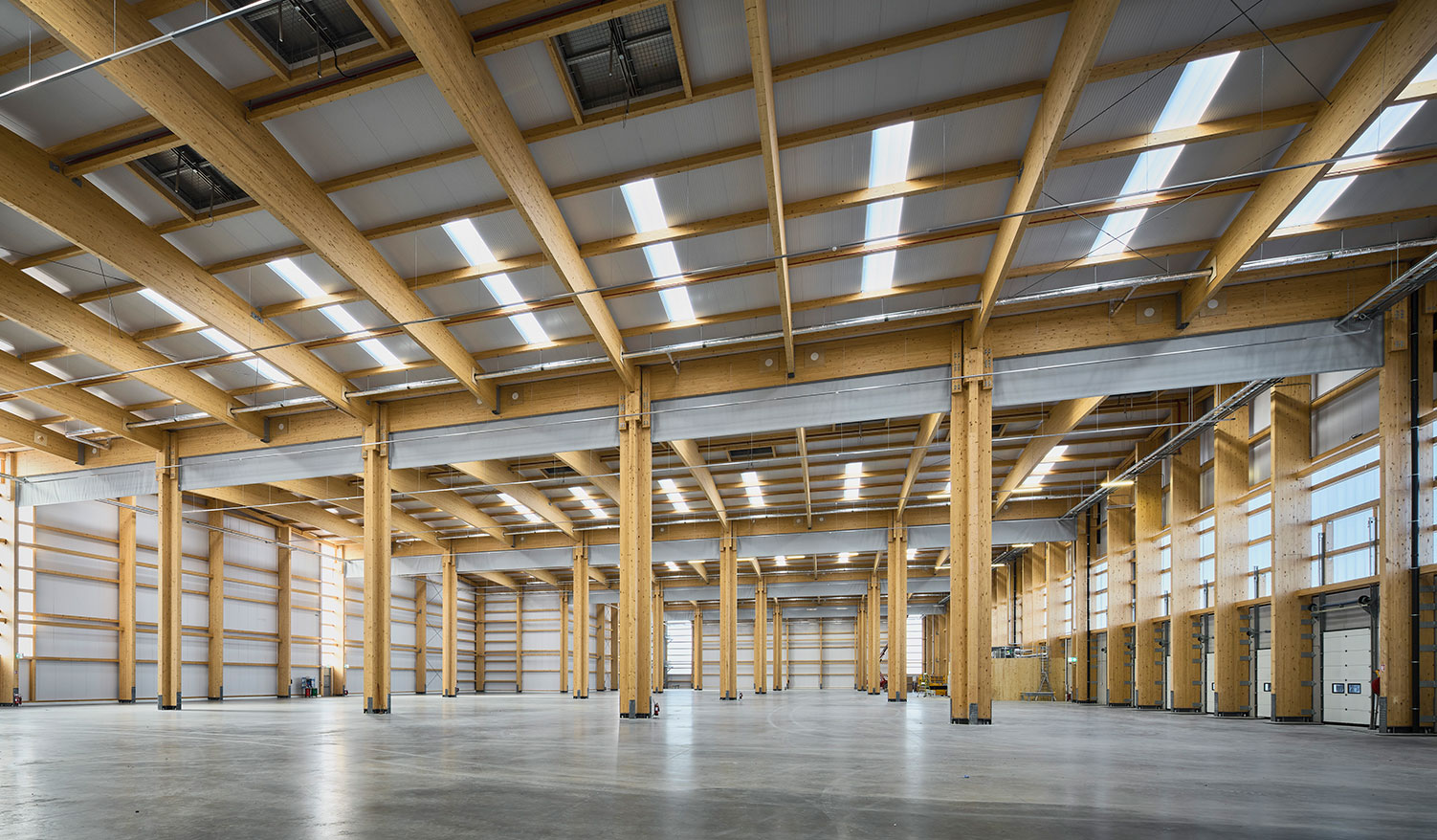
A key differentiator for IPUT is the use of glulam timber construction, pioneered in their earlier Quantum Logistics Park.
The adoption of timber required navigating significant regulatory hurdles in Ireland, where timber framing is generally prohibited for buildings over 12 meters high.
Beyond cost, timber offers substantial sustainability benefits and a superior internal environment.
Nexus also offers numerous amenities for the local community, including cycling paths throughout the park, with fence-free permeability for local residents, as well as on-site sports facilities and a covered pavilion to encourage outdoor dining, with plug-in facilities for food trucks.
Securing power and offsetting carbon
Like their counterparts in Amsterdam and the UK, securing grid connections in Dublin is a major challenge. IPUT was fortunate to secure enough capacity for Phase 1 of their North Dublin park.
The fundamental story of the Dublin logistics market is an acute shortage of modern Grade A space. Over the last decade, take-up has averaged 280,000 m² per annum. In 2024 and 2025, this figure has been constrained solely by a lack of stock
In an innovative move toward true net-zero, IPUT has moved beyond purchasing international carbon credits. Instead, they purchased forestry land in the west of Ireland.
Dublin’s secret sauce
When asked to account for Ireland’s predicted economic and population outperformance in Europe, Hunt pointed to the ecosystem built around multinational corporations.
Beyond tax incentives, the primary draw is access to talent and the city’s multicultural environment. With a highly educated workforce, Dublin serves as the global or EMEA headquarters for major tech firms, creating a virtuous cycle that fuels demand for high-end offices, data centres, and, inevitably, modern logistics.